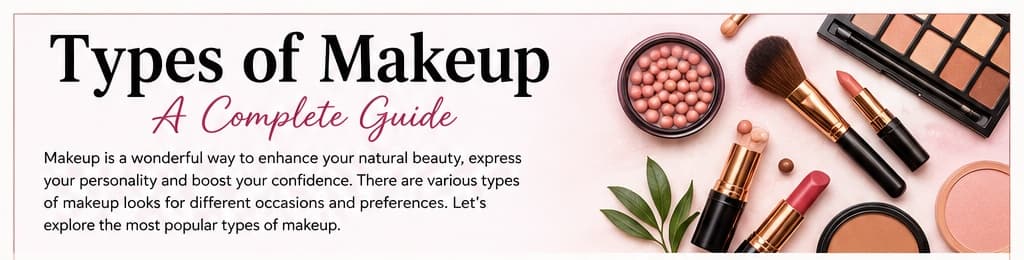
Understanding different types of skin tone
Skin tone is the natural colour you see on the surface of your skin. It mostly comes from melanin — the pigment your skin makes — but blood flow, genetics, and sun exposure play a part too. Human skin sits on a smooth spectrum, so the groups in this guide are helpful descriptions, not rigid boxes. Knowing your tone and undertone makes it much easier to pick skincare, foundation shades, and even clothing colours that suit you.
Tone and undertone are different
- Your skin tone can change a little with tanning or the seasons. Your undertone — the subtle cast beneath the surface — usually stays the same for life.
At a glance
- Skin tone
- Visible depth of colour, from very fair to deeply pigmented
- Undertone
- The cool, warm, neutral, or olive cast beneath the surface
- Sun response
- How easily skin burns or tans (the Fitzpatrick scale)
The four main types of skin tone
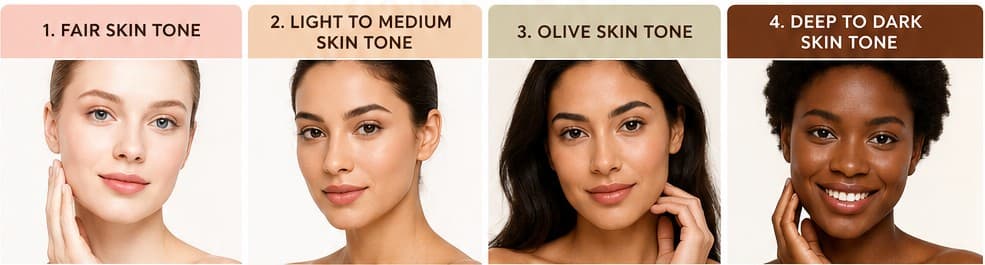
Skin colour is continuous, but four broad groups are commonly used in beauty and skincare conversations. The most useful description combines what you see (tone), what sits underneath (undertone), and how your skin behaves in sunlight.
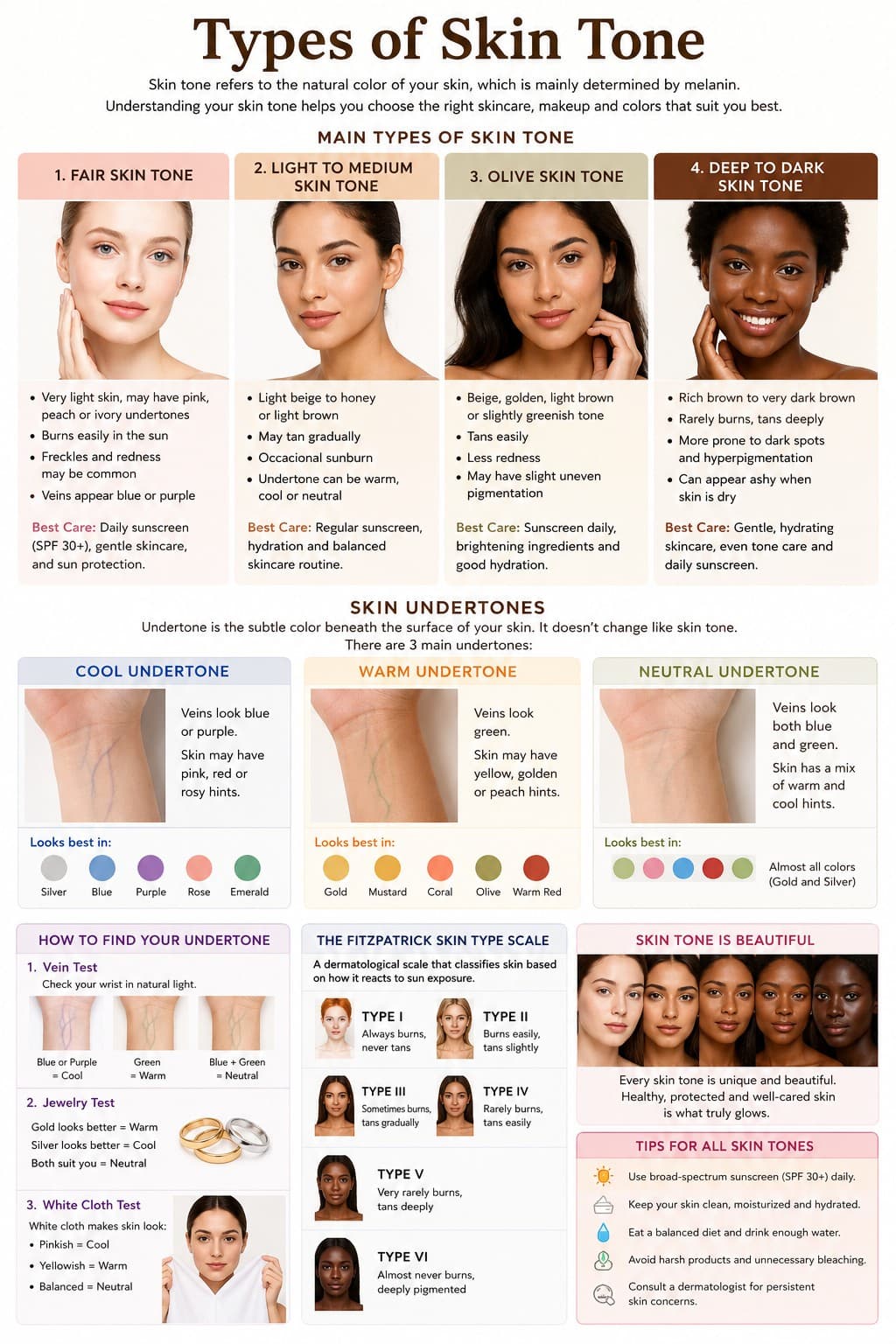
1. Fair skin tone
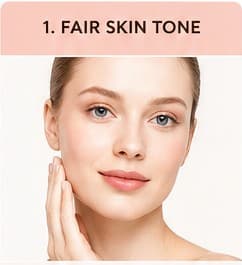
Fair skin is usually very light and can look ivory, porcelain, pink, or peach. With less visible melanin, redness and freckles show up more easily.
- May burn quickly in strong sunlight
- Freckles or visible redness are common
- Veins can appear more noticeable
Best care
- Use a broad-spectrum sunscreen of SPF 30 or higher every day, reapply when outdoors, and choose gentle products that protect the skin barrier.
2. Light to medium skin tone
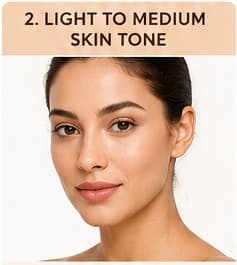
This range covers beige, honey, and light-brown complexions. It can carry cool, warm, neutral, or olive undertones.
- May tan gradually
- Can still get the occasional sunburn
- Dark marks (pigmentation) can appear after acne or irritation
Best care
- Keep up daily sunscreen and balanced hydration, and treat irritation early so it doesn't leave lingering dark marks.
3. Olive skin tone
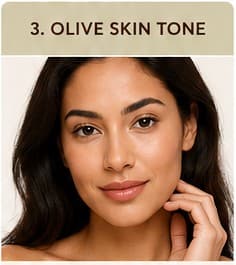
Olive skin often has beige, golden, muted green, or light-brown tones. It can be warm, neutral, or cool olive.
- Often tans fairly easily
- Redness tends to be less obvious
- Uneven pigmentation or dullness can still occur
Best care
- Wear sunscreen every day, stay hydrated, and introduce brightening ingredients gradually — never harsh bleaching products.
4. Deep or dark skin tone
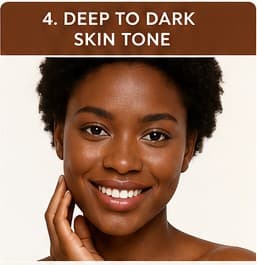
Deep skin tones range from rich brown to very dark brown. Extra melanin gives some natural UV protection, but it does not cancel out sun damage.
- Sunburn may be less visible, but it still happens
- Dark marks after acne can last longer
- Dryness can look grey or ashy
Best care
- Choose gentle, hydrating care, avoid irritation, and use sunscreen daily to help prevent uneven pigmentation and visible sun damage.
A useful reminder
- No skin tone is naturally healthier or more attractive than another. Healthy skin is comfortable, protected, and well cared for.
Skin tone vs skin undertone
Skin tone describes how light or deep the surface colour looks. Undertone is the subtle colour beneath the surface. Undertone explains why two people with a similar depth of skin can suit completely different foundation shades or clothing colours.
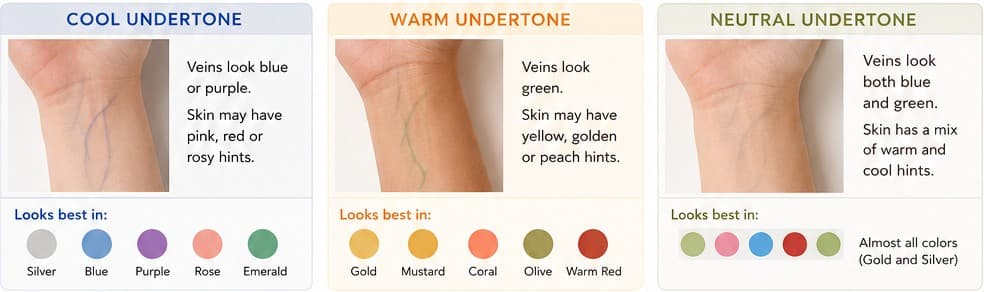
| Undertone | Common visual clues | Often complemented by |
|---|---|---|
| Cool | Pink, rosy, red, or bluish cast; veins may look blue or purple | Silver, blue, purple, rose, emerald |
| Warm | Golden, yellow, peach, or orange cast; veins may look green | Gold, mustard, coral, olive, warm red |
| Neutral | A balanced mix of cool and warm signs; veins may look blue-green | Both gold and silver; many colour families |
How to identify your undertone
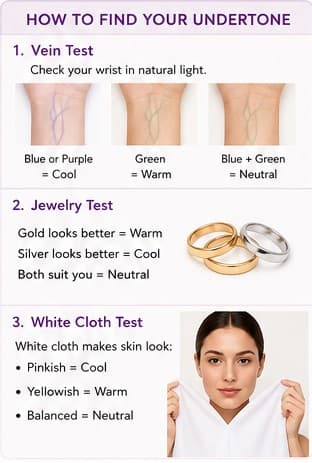
1. Vein test
Look at your wrist in indirect daylight. Blue or purple veins suggest a cool undertone, green-looking veins suggest warm, and a mix of both suggests neutral.
2. Jewellery test
Notice whether gold, silver, or both look most natural against your skin. Gold flattering you points to warm, silver to cool, and both to neutral. It's subjective, but a useful supporting clue.
3. White-cloth test
Hold plain white fabric near your face. A pinkish cast suggests cool, a golden or yellow cast suggests warm, and a balanced look suggests neutral.
4. Foundation test
Test a few shades along your jawline — not your wrist. The right match should visually disappear in natural light without looking pink, orange, grey, or yellow.
Use more than one clue
- These tests are approximate. Lighting, tanning, surface redness, pigmentation, and even camera processing can change how skin appears.
The Fitzpatrick skin type scale
Dermatologists use the Fitzpatrick scale to describe how skin typically responds to sunlight. It's about burning and tanning — not a measure of ethnicity, beauty, health, or exact skin colour.
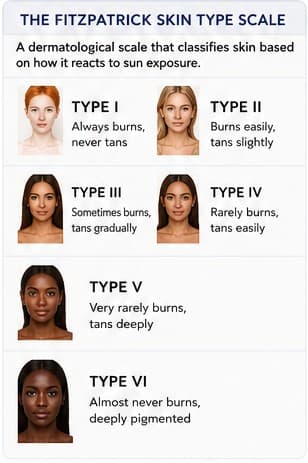
- Type I — always burns; rarely or never tans
- Type II — burns easily; tans slightly
- Type III — sometimes burns; tans gradually
- Type IV — rarely burns; tans easily
- Type V — very rarely burns; tans deeply
- Type VI — almost never burns; deeply pigmented
Sun protection is universal
- Every Fitzpatrick type can develop sun damage and skin cancer. Daily broad-spectrum sunscreen matters for all skin tones.
Skincare tips for every skin tone
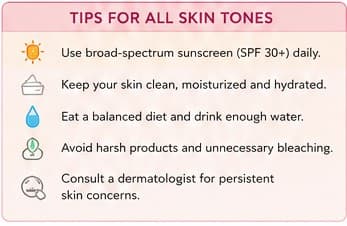
- Protect — apply broad-spectrum SPF 30 or higher each morning, and reapply during long stretches outdoors.
- Cleanse gently — skip aggressive scrubbing, which can make irritation and pigmentation worse.
- Moisturise — support the skin barrier with a moisturiser suited to your skin type.
- Treat inflammation early — acne, rashes, and irritation can leave lasting marks, especially when picked at.
- Avoid unsafe lightening products — unregulated bleaching creams can damage skin and may contain harmful ingredients.
- Seek expert advice — see a dermatologist for persistent pigmentation, changing spots, rashes, or unexplained colour changes.
Every skin tone is beautiful
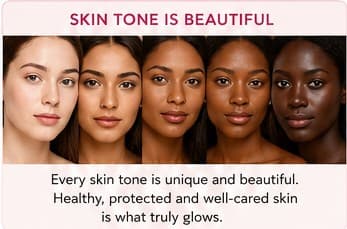
Skin tones range from very fair to deeply pigmented, with countless shades in between. Understanding your visible tone, undertone, and sun response makes it easier to choose skincare, makeup, and clothing colours — but these labels should never be used to rank or stereotype anyone.
The healthiest approach is simple: protect your skin from the sun, treat it gently, address concerns early, and appreciate its natural colour.
Find artists who work with every skin tone
A good makeup artist matches base and colour to your undertone, not just your depth of skin. Meilo ranks artists by the quality of their actual work, so you can see real looks on real skin tones before you book.
Before you book
- What is the difference between skin tone and undertone?
- Skin tone is the surface colour you see — how light or deep your skin looks. Undertone is the subtle cool, warm, or neutral cast beneath the surface. Tone can shift with tanning or seasons; undertone usually stays the same.
- How do I find out my undertone?
- Combine a few clues: check whether your wrist veins look blue-purple (cool), green (warm), or both (neutral); see whether gold or silver jewellery flatters you more; and hold white fabric near your face to see if your skin casts pink (cool) or golden (warm). No single test is definitive.
- Does dark skin need sunscreen?
- Yes. Extra melanin gives some natural UV protection, but sun damage, uneven pigmentation, and skin cancer can affect every skin tone. Daily broad-spectrum SPF 30+ is recommended for everyone.
- What is the Fitzpatrick scale?
- A scale dermatologists use to describe how skin responds to sunlight, from Type I (always burns, never tans) to Type VI (almost never burns, deeply pigmented). It describes burning and tanning only — not ethnicity or exact skin colour.
- Can my skin tone change?
- Yes, a little. Sun exposure, seasons, and things like inflammation can shift how light or deep your skin looks. Your undertone, though, generally stays consistent for life.
- Are skin lightening creams safe?
- Unregulated bleaching creams can seriously damage skin and may contain harmful ingredients. If you're concerned about pigmentation, see a dermatologist for safe, evidence-based options instead.