Summer vs winter bridal makeup
The look you saved on your phone was shot in one season. Your wedding might be in the other. Heat moves makeup; cold dries it out — and the fix is mostly in the first twenty minutes, before any colour goes on.
The season changes the prep, not the person
Nobody needs a different face for June and December. What changes is what goes underneath — how much moisture the skin gets, whether the primer is there to hold oil back or hold water in, and how much of the finish is matte. Get those right and the same look survives either season.

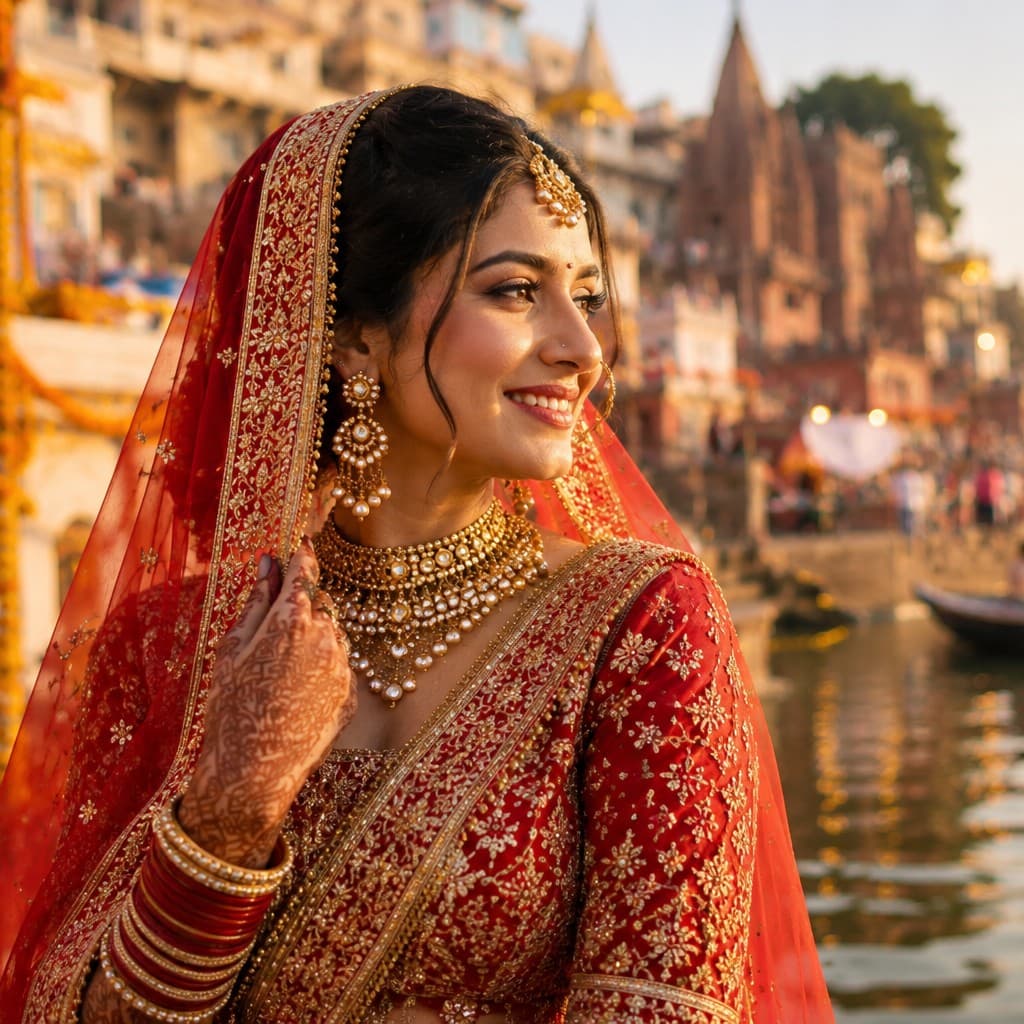
Daylight is unforgiving. A lighter base photographs better than a heavy one.

Bright outfits carry the colour, so the face can stay soft.
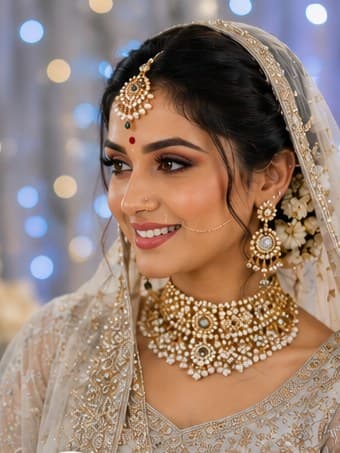
Indoor light is warmer and dimmer. A little glow reads as healthy, not shiny.

Deeper lips and warmer shadow hold up against candlelight.
Summer: it has to survive the day
Heat and humidity do two things to makeup — they thin it out and they move it. Most of the answer is choosing lighter products, not more of them. A heavy base does not last longer in the heat; it slides sooner and looks heavier in daylight photographs.
Waterproof liner and mascara are worth it even if you never cry — humidity alone will lift a standard formula by the third hour. Powder shadow creases less than cream when the lid is damp. And a long-wear blush gives you the flush without adding another layer of shine to skin that is already producing its own.
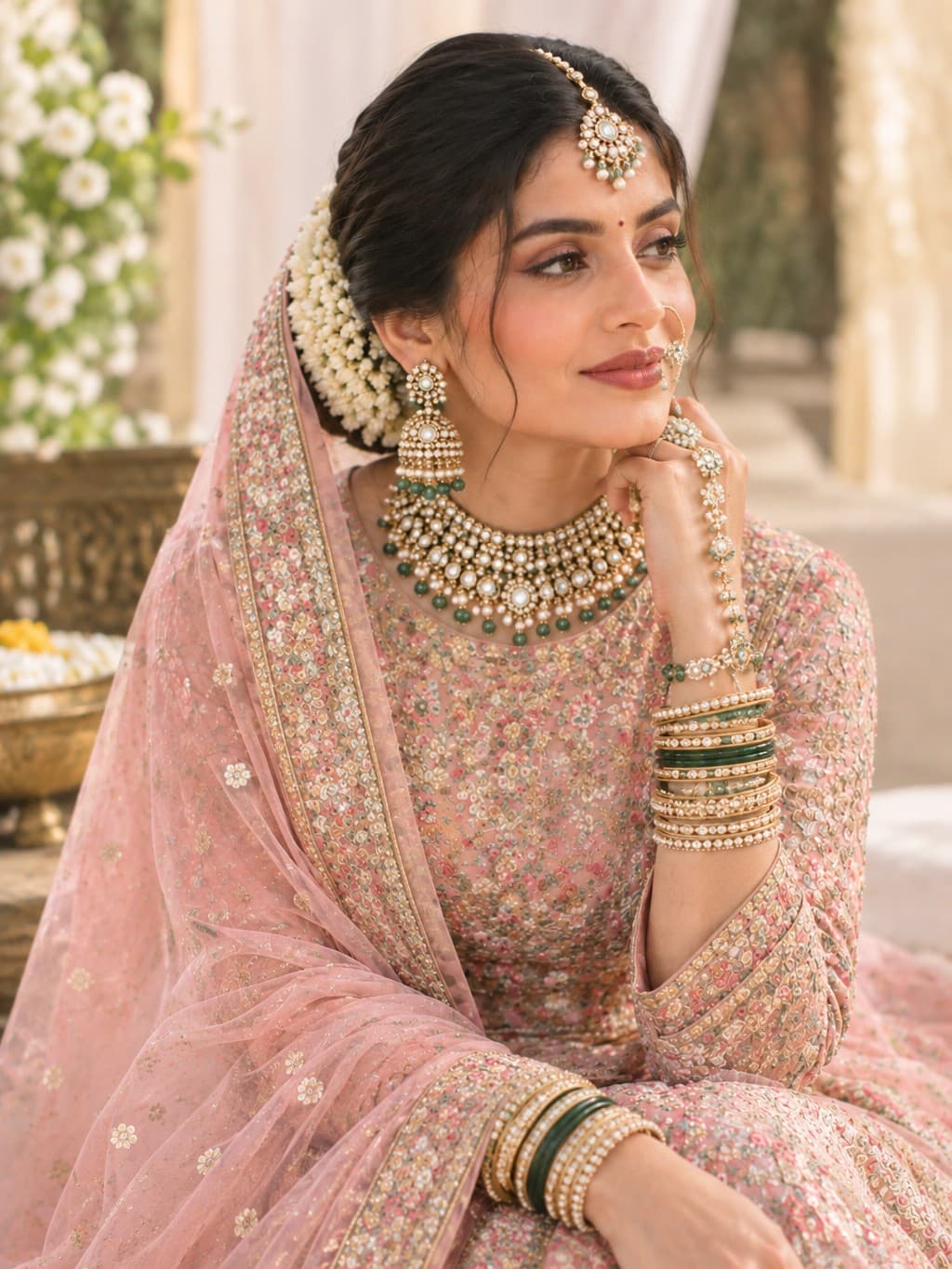
Summer rule of thumb: pick products that feel light on the skin. Your makeup should be working with the glow the heat is already giving you, not trying to cover it.
Winter: the work happens before the makeup
Cold air and heaters pull water out of the skin, and dry skin shows every edge — foundation catches on flaky patches and settles into lines it would otherwise skip. Nothing you do at the makeup stage fixes that. It gets fixed in the twenty minutes before.
Winter is the season you can go richer
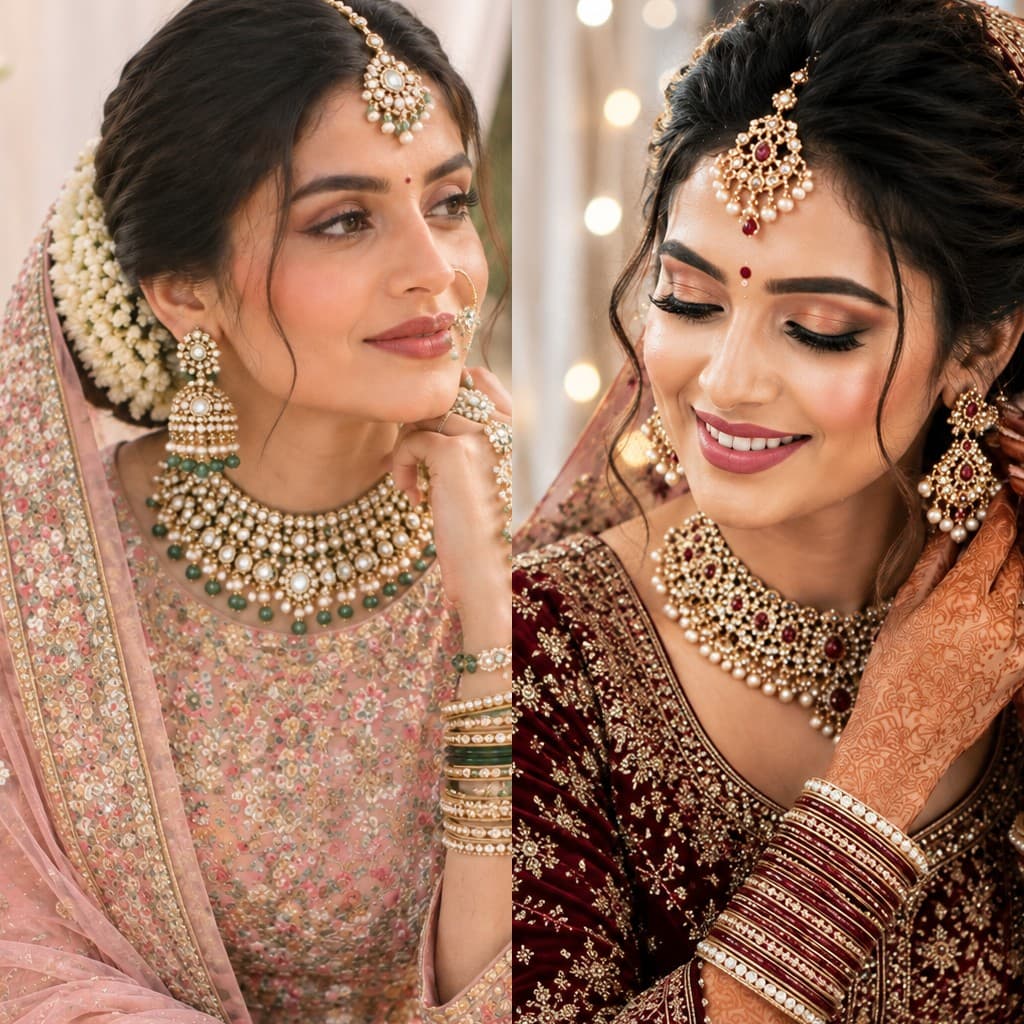
Warm browns, rosy tones, berry shades and a soft plum lip all read beautifully under indoor light in a way they can look heavy at a summer afternoon mandap. Cream blush over a hydrated base gives a flush that looks like skin rather than powder — and it will not cling to a dry patch the way a powder can.
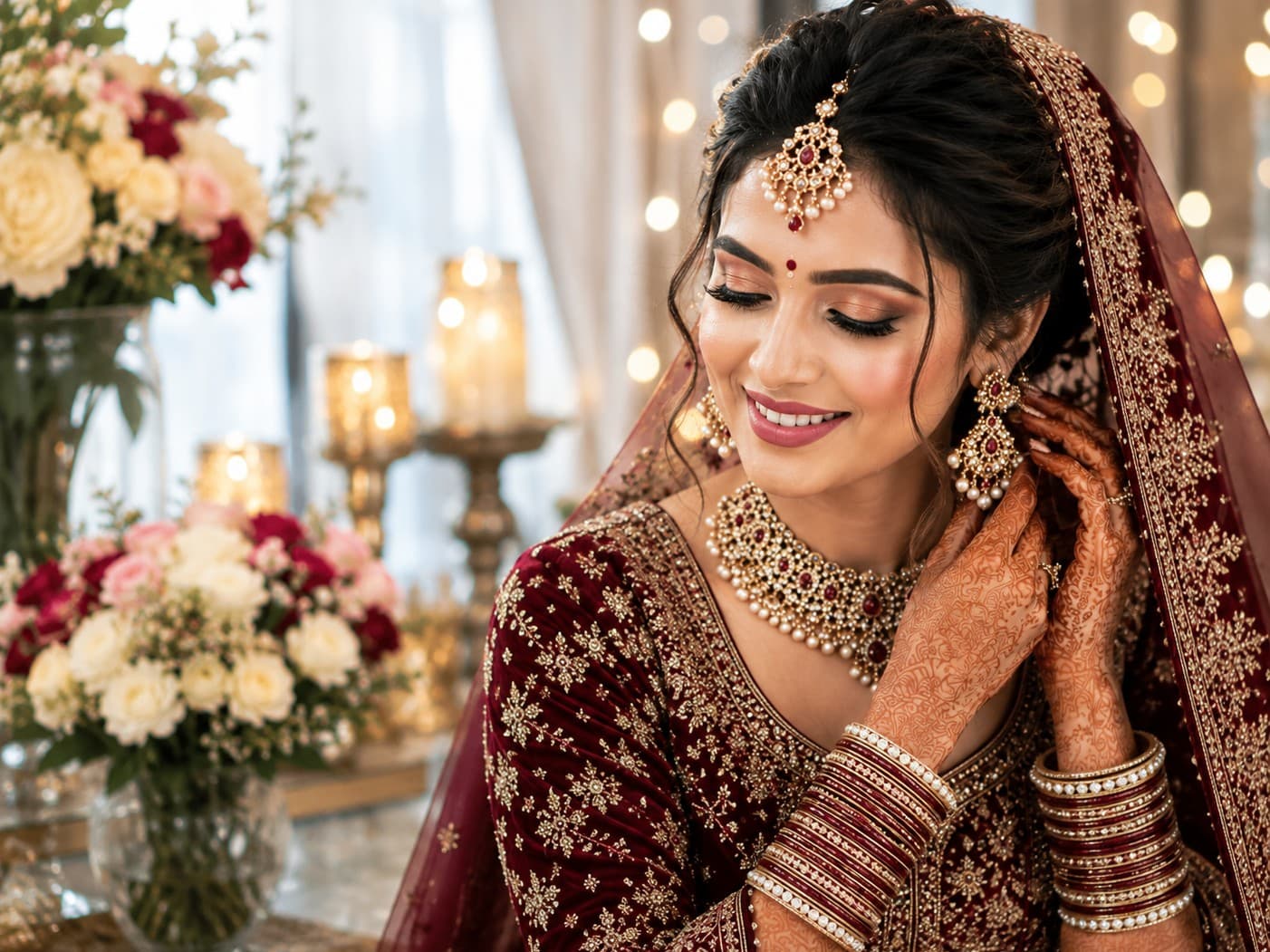
Winter rule of thumb: moisturise, then wait. Give the skincare a few minutes to actually absorb before the primer goes on. Foundation over wet moisturiser pills, and it will keep pilling all day.
The finish is the actual decision
Most of the seasonal advice above collapses into one question: how much shine do you want on the skin? There is no rule here. Your skin type matters as much as the month — oily skin in December may still want a matte T-zone, and dry skin in May will still want some dew.
Choose this if the day is outdoors
Direct sun finds every shiny patch, and a phone camera exaggerates it. Matte does not have to mean flat — a natural satin keeps some life in the skin.
Choose this if the day is indoors
Warm indoor light flattens skin. A little luminosity puts the dimension back, and it photographs as healthy rather than oily.
Tell your artist about the light
Season is a rough proxy for lighting, and lighting is what the photographs will actually record. Tell your artist the ceremony time and whether you are outside — it changes their product choices more than the month does.
Outdoor daylight
Shows everything. Lighter base, controlled shine, and blend the jawline properly.
Indoor and warm
Flattens the face. A little more definition and a little more glow than feels right in the mirror.
Evening and flash
Flash finds SPF and heavy powder. Worth raising at the trial, not on the day.
The season can guide the look. It does not get to decide it. If you love glowing skin, have a luminous summer face — just build it on a base that will hold.
Take this to your trial
- The month and the ceremony time
- Indoors, outdoors, or both
- Whether your skin runs oily or dry
- How long you will be in the makeup
- Any product your skin reacts to
- Three saved looks you actually like
Photograph the trial result on your own phone, in the light you will actually be married in. It is the single most useful thing you can do at that appointment.
Before the trial
Save the looks, then find the artist
Browse real bridal work on Meilo, save the finishes you keep coming back to, and take them to the artist whose portfolio already looks like the season you are marrying in.
Before you book
- Will my summer makeup really melt?
- Not if it is built for the heat. What fails is a heavy base applied the way a winter base would be. Lighter products, waterproof eyes and a setting spray hold up through a full day of functions.
- Can I wear a dewy finish for a summer wedding?
- Yes. Ask for the glow to be placed — high points of the cheek, not the whole face — and for the T-zone to stay matte. That reads as dewy in photographs without looking like the heat got to you.
- Should I do my trial in the same season as the wedding?
- Ideally, and at roughly the same time of day. A trial done in December tells you very little about how the same products will behave on a May afternoon.
- Does my skin type matter more than the season?
- Often, yes. Oily skin in winter still needs some oil control, and dry skin in summer still needs moisture. Treat the season as a starting point and your skin as the deciding vote.
- Do I need different makeup for each wedding function?
- Not different products, usually — different amounts. A daytime haldi or mehendi wants far less than an evening reception, even in the same week and the same weather.