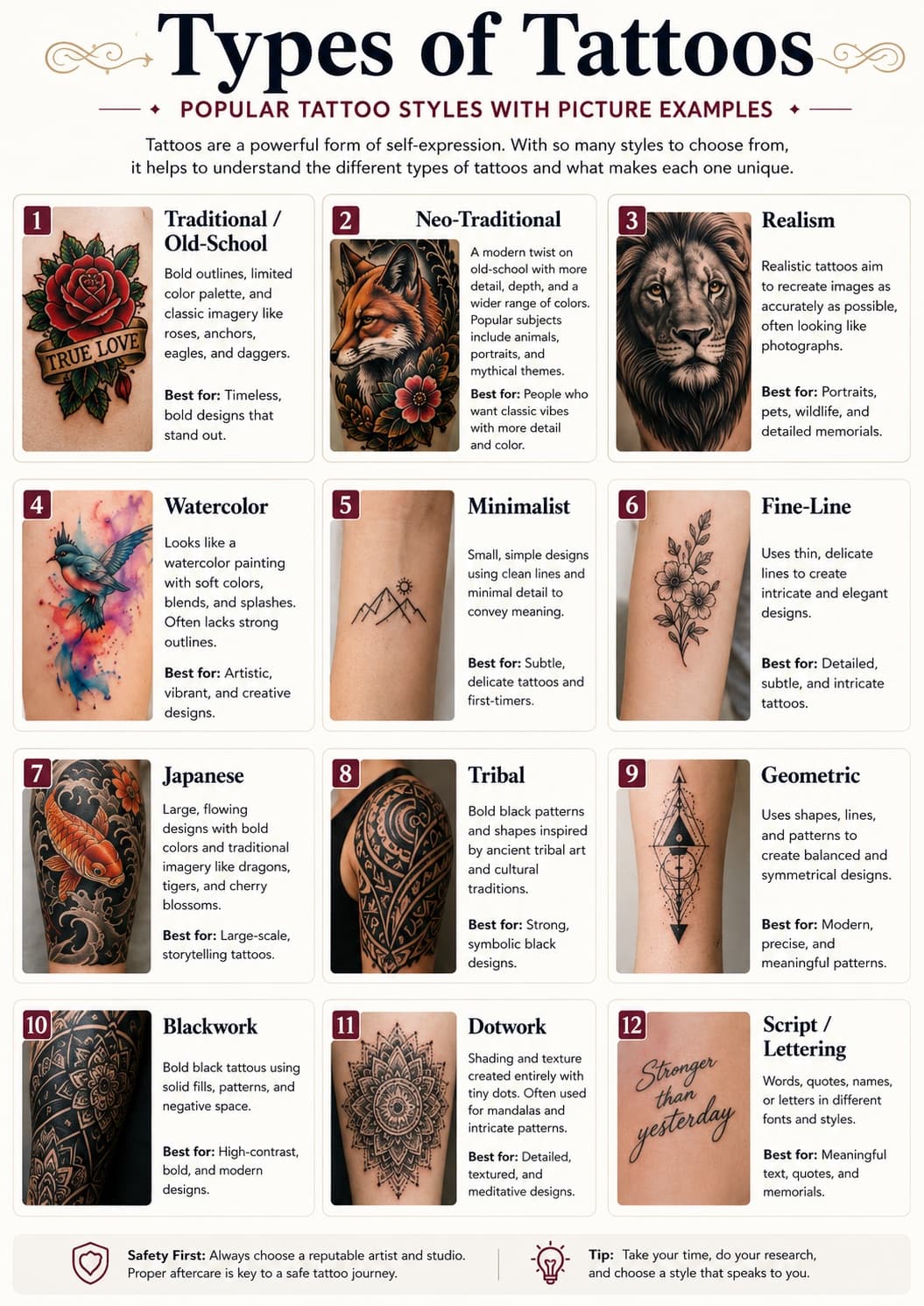
Types of tattoos: 12 styles with picture examples
A tattoo style is the visual language that turns an idea into permanent art. Tattoos can preserve memories, celebrate identity, mark personal change, or simply bring a piece of art to life. The subject matters — but the style decides the mood, the level of detail, the colour, and how the design reads on the body for years to come. This guide walks through twelve widely recognised styles with picture examples, so you can speak clearly with a tattoo artist and pick a direction that suits your story.

Before you choose a style
The same idea can look completely different in different hands. A rose can be a bold old-school emblem, a delicate fine-line sketch, a realistic botanical study, or a loose watercolor splash. Start with the feeling you want the tattoo to create, then weigh four things:
- Meaning
- What story, memory, or aesthetic should it express?
- Placement
- How will it follow movement and body contours?
- Scale
- Does the detail need more room to stay readable?
- Artist
- Do they show strong healed work in this exact style?
1. Traditional / old-school
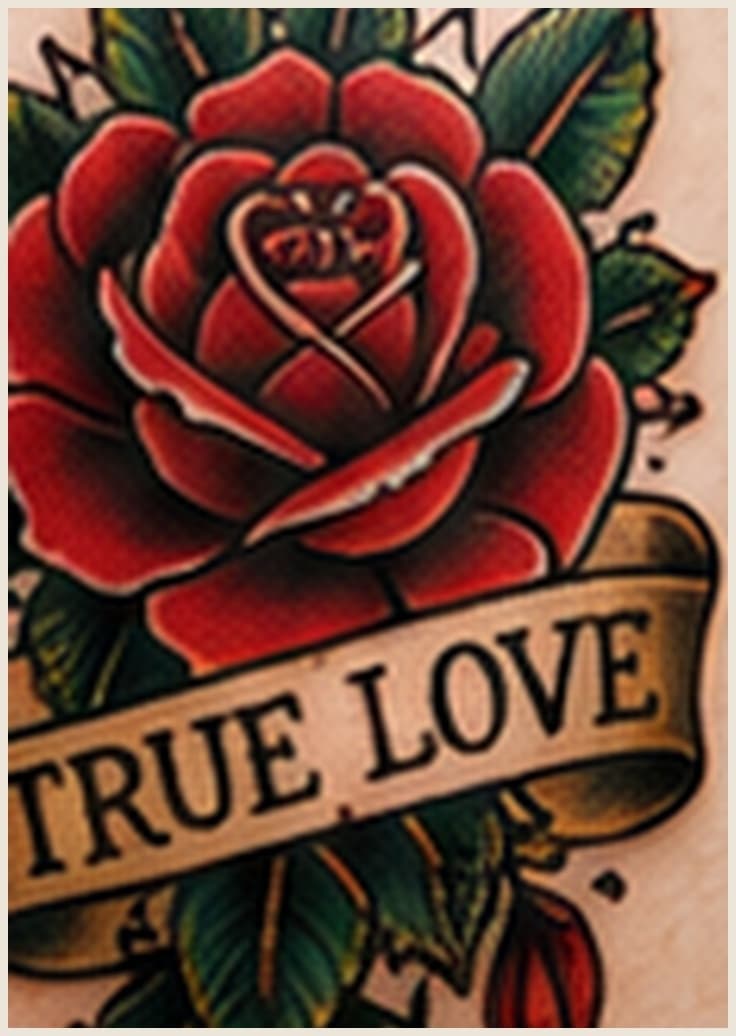
Traditional tattoos are recognised by bold black outlines, solid colour blocks, and instantly readable imagery. The style grew from early Western tattoo culture and stays popular because it's striking, uncomplicated, and built to age clearly.
- Key features — heavy outlines, limited colours, simple shading, strong contrast
- Popular designs — roses, anchors, swallows, eagles, hearts, daggers, ships
- Best for — a timeless, bold design you can recognise from across the room
- Discuss with your artist — enough size for the outlines and colour areas to stay clear as the tattoo ages
2. Neo-traditional
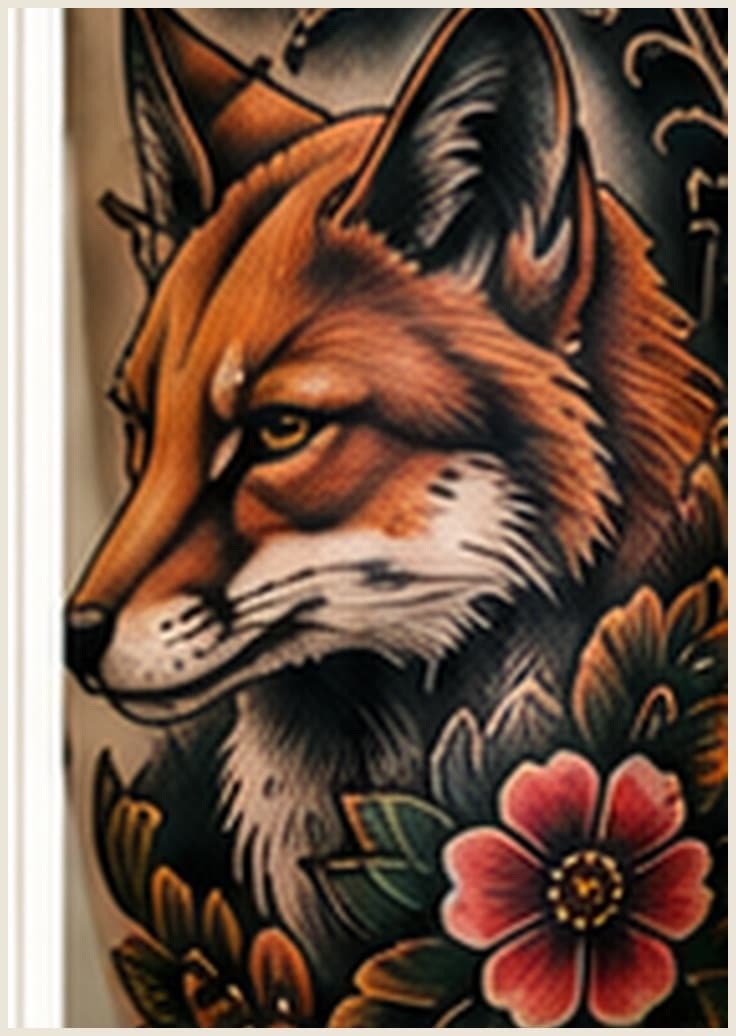
Neo-traditional keeps the bold structure of old-school work but adds richer colour, decorative detail, and more dimensional shading — like a highly polished illustration with vintage influences.
- Key features — strong outlines, layered shading, jewel-like colours, ornamental backgrounds
- Popular designs — animals, glamorous portraits, flowers, insects, mythological figures
- Best for — classic tattoo imagery with greater depth, detail, and drama
- Discuss with your artist — a portfolio showing clean outlines and controlled colour blending
3. Realism
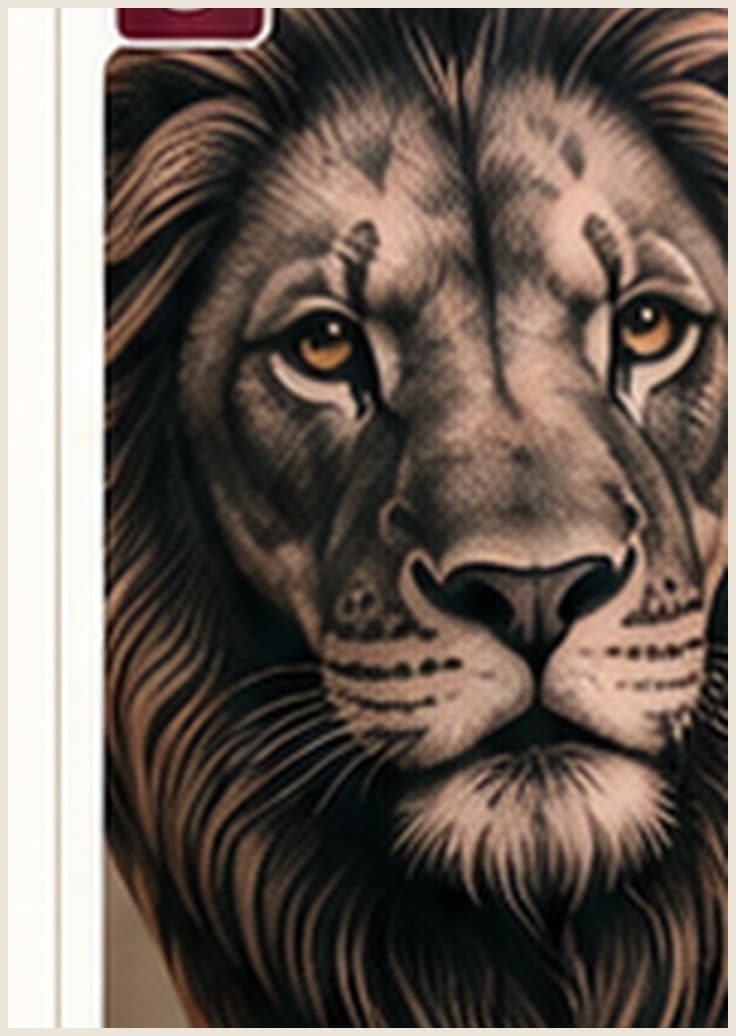
Realism aims to reproduce a subject as accurately as possible, sometimes with a photographic effect. It demands careful proportion, smooth tonal transitions, and an artist who understands light, texture, and anatomy.
- Key features — precise detail, natural proportions, soft gradients, convincing light and shadow
- Popular designs — portraits, pets, wildlife, film characters, eyes, flowers, landscapes
- Best for — memorial tattoos, or any subject where likeness and emotion matter most
- Discuss with your artist — adequate space; very small portraits can lose definition over time
4. Watercolor
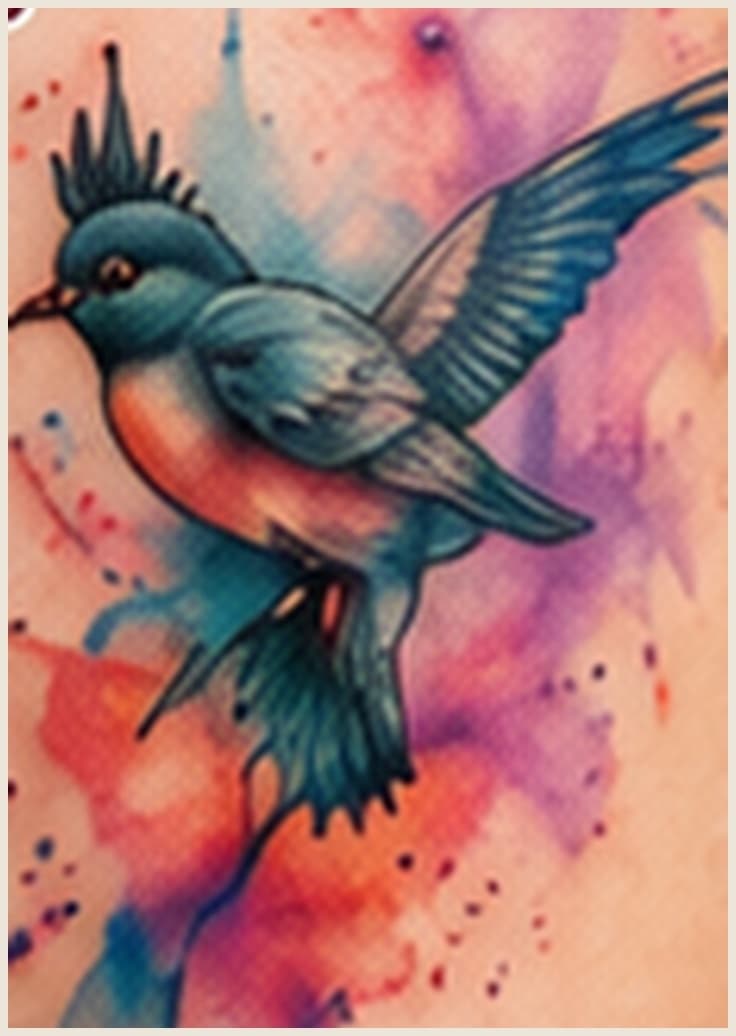
Watercolor tattoos imitate the loose, expressive look of painted pigment — soft washes, splashes, blended hues, and colour that seems to flow beyond the main form.
- Key features — fluid colour, painterly edges, splashes, gradients, occasional sketch lines
- Popular designs — birds, flowers, butterflies, abstract shapes, animals, musical themes
- Best for — colourful, artistic body art with a light, expressive mood
- Discuss with your artist — how contrast and darker anchor lines will preserve readability as colours soften
5. Minimalist
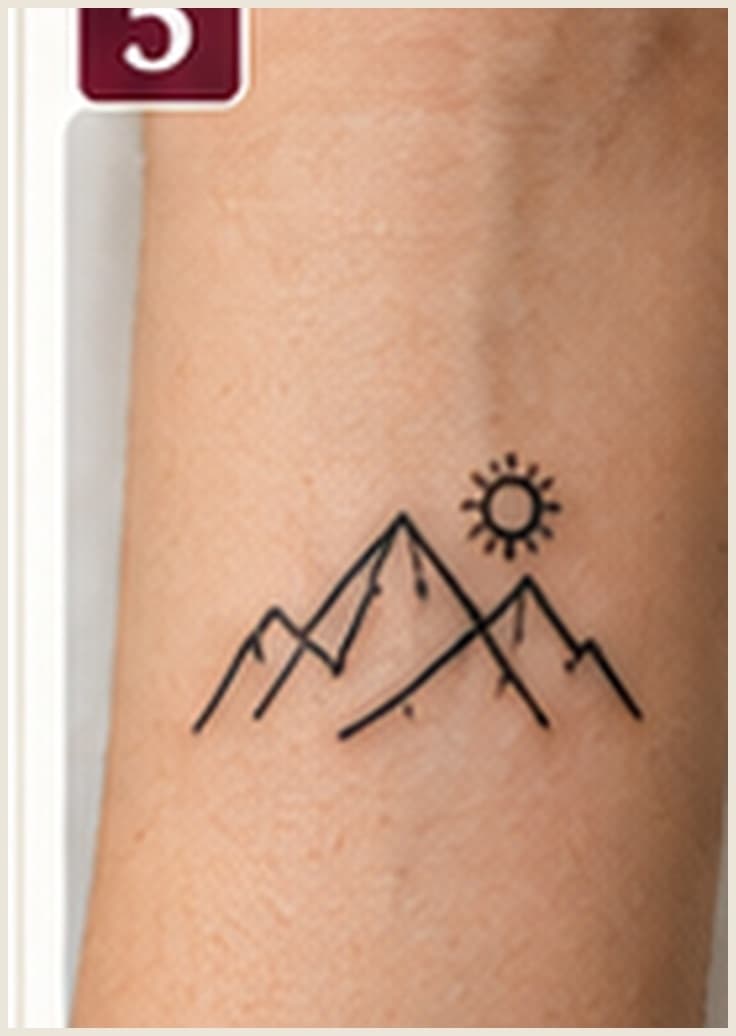
Minimalist tattoos communicate an idea through a few carefully chosen marks. Their appeal is restraint: a simple outline or tiny symbol can carry deep personal meaning without dominating the body.
- Key features — clean lines, small scale, open space, very limited detail
- Popular designs — mountains, moons, waves, hearts, coordinates, symbols, tiny objects
- Best for — first-timers and anyone who prefers subtle, discreet body art
- Discuss with your artist — small doesn't mean easy; tiny lines need precision and breathing room
6. Fine-line
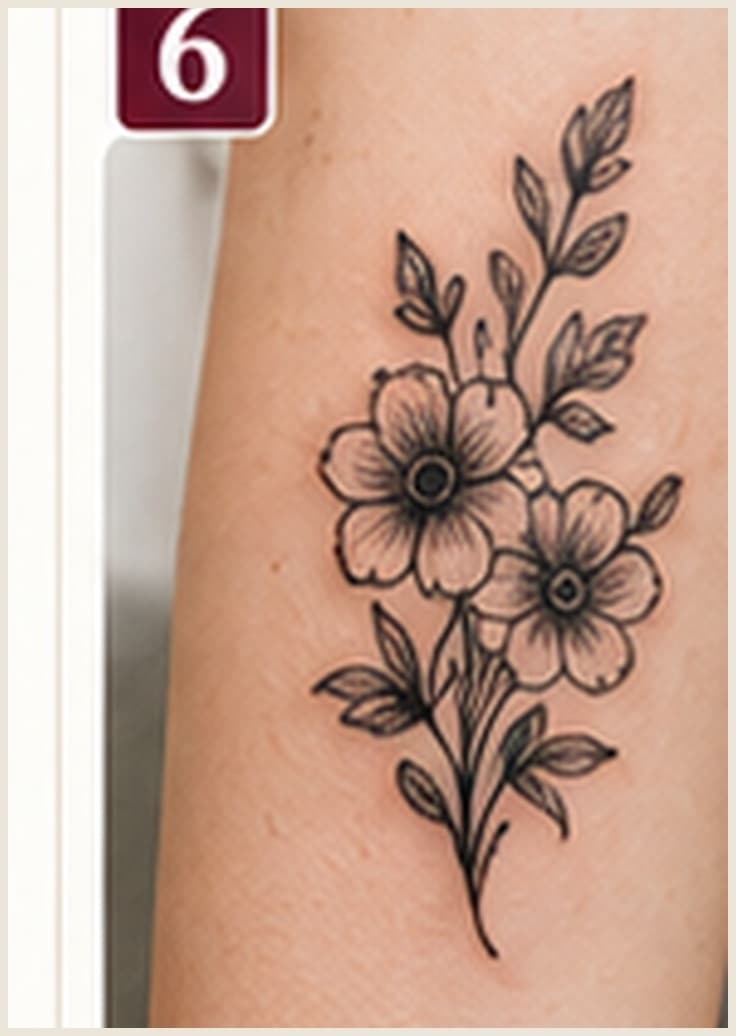
Fine-line tattoos use delicate needles and light linework to create elegant, intricate designs. They look softer than traditional work and can resemble pen-and-ink illustration.
- Key features — thin outlines, subtle shading, delicate textures, refined detail
- Popular designs — botanicals, butterflies, small portraits, architecture, ornamental motifs
- Best for — detailed but understated tattoos with an elegant finish
- Discuss with your artist — healed examples; very fine details spread or fade differently on each skin type
7. Japanese
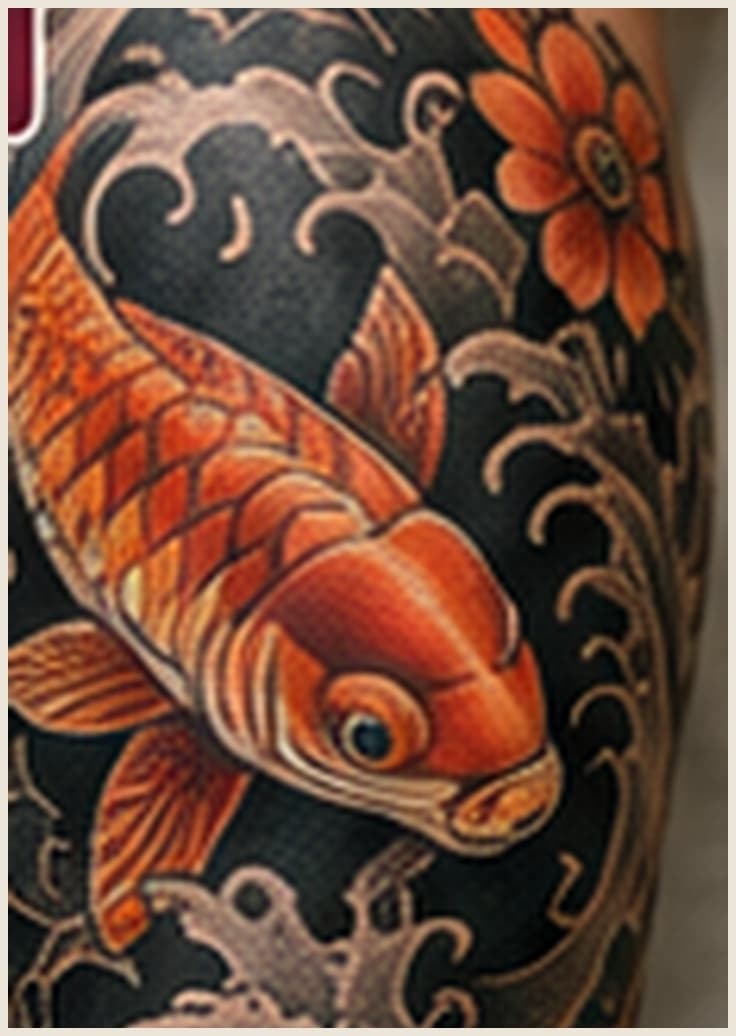
Japanese tattooing is known for large, flowing compositions that follow the shape of the body. A central subject is linked with waves, clouds, wind, smoke, or flowers to create one unified visual story.
- Key features — bold colour, dynamic movement, strong outlines, connected backgrounds
- Popular designs — dragons, koi, tigers, snakes, samurai, peonies, chrysanthemums, waves
- Best for — large sleeves, back pieces, and storytelling tattoos with strong symbolism
- Discuss with your artist — experience with Japanese composition and the traditional meanings of the imagery
8. Tribal
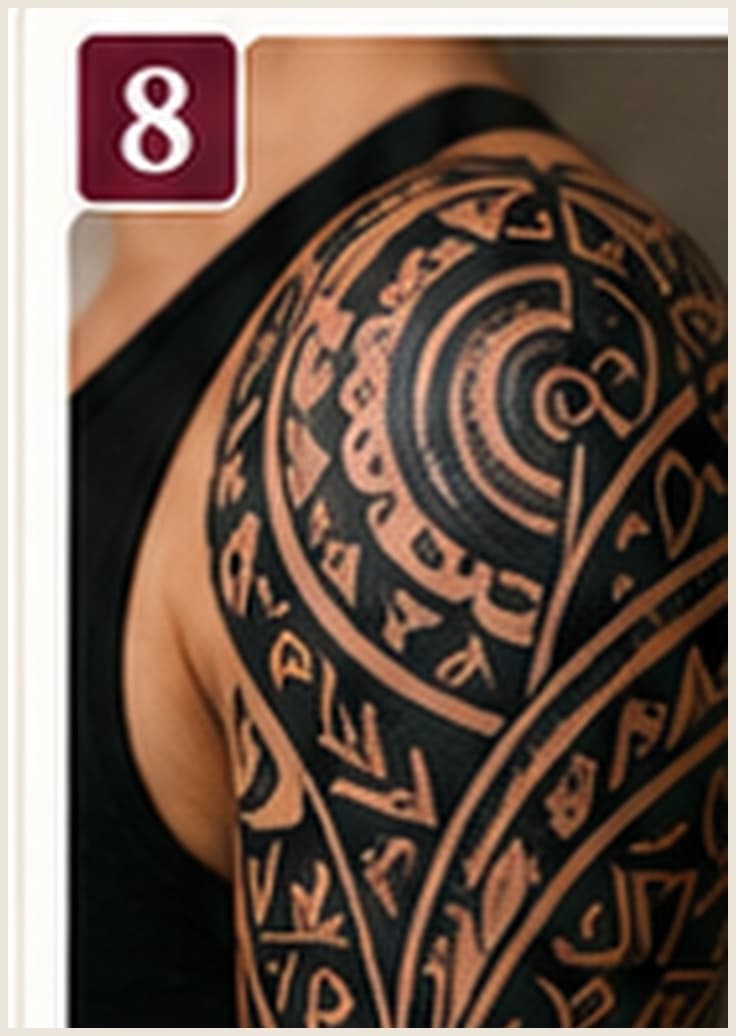
Tribal is a broad label covering many distinct Indigenous and cultural traditions. Modern designs often use bold black shapes and repeated patterns — but culturally specific symbols can carry identity, ancestry, or status meanings.
- Key features — solid black forms, repeated motifs, curved bands, symmetry, negative space
- Popular designs — shoulder panels, armbands, chest pieces, patterns tied to a particular tradition
- Best for — bold, graphic body art — especially with a genuine cultural connection
- Discuss with your artist — research the exact tradition; don't copy sacred or status-based markings without understanding them
9. Geometric
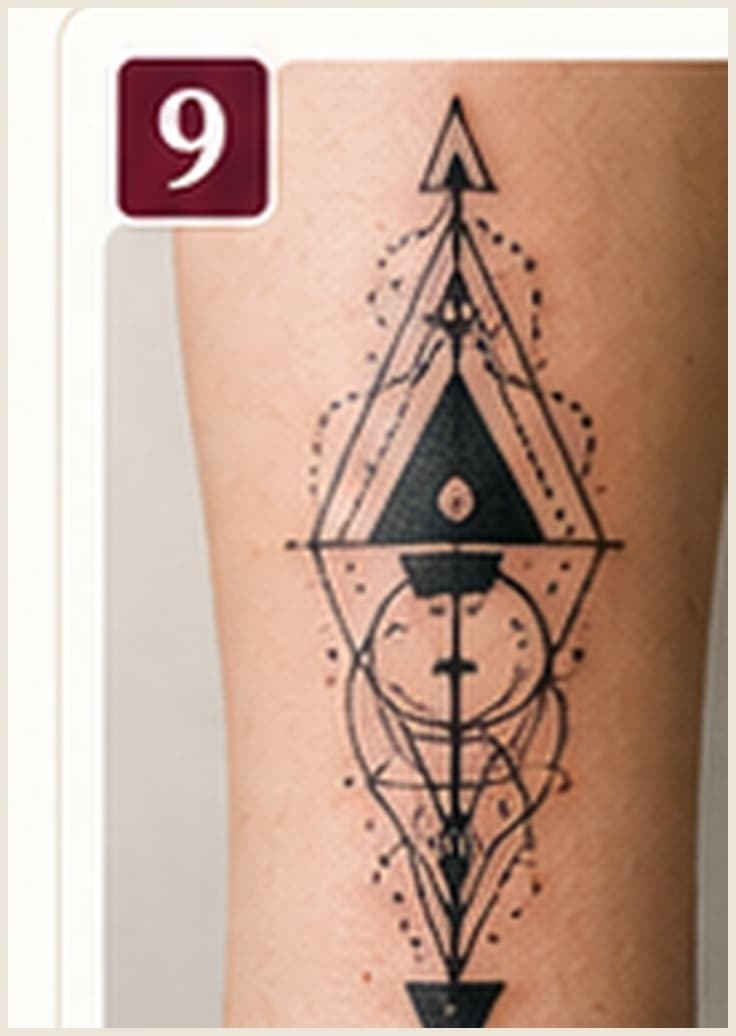
Geometric tattoos turn lines, shapes, and symmetry into balanced compositions — fully abstract, or used to construct animals, natural objects, and symbolic designs.
- Key features — precise lines, circles, triangles, symmetry, repeating patterns, measured spacing
- Popular designs — mandalas, sacred-geometry forms, animals, arrows, abstract frameworks
- Best for — people drawn to order, precision, modern design, and symbolic patterns
- Discuss with your artist — placement is crucial; body curves distort straight lines, so mapping experience matters
10. Blackwork
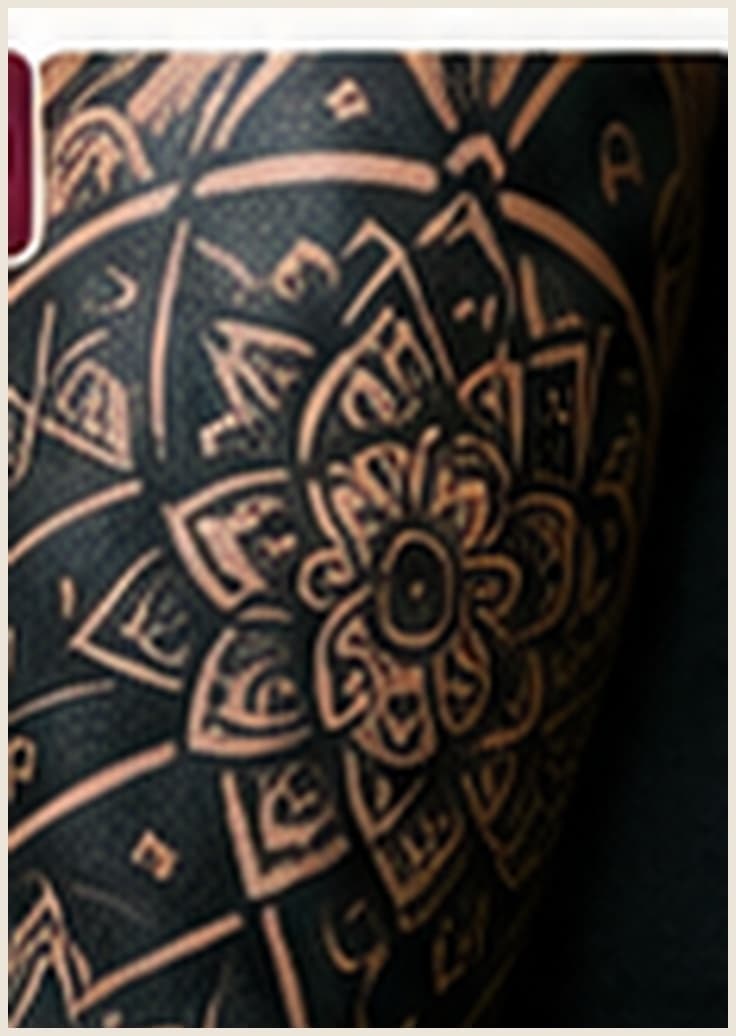
Blackwork uses black ink as the main or only colour — from decorative linework to dense solid areas, creating dramatic contrast between inked skin and untouched negative space.
- Key features — high contrast, solid fills, graphic patterns, negative space, bold silhouettes
- Popular designs — ornamental sleeves, abstract compositions, large patterns, blackout elements
- Best for — strong, modern designs with a powerful visual presence
- Discuss with your artist — large solid areas need planning and commitment; ask about healing and future cover-up limits
11. Dotwork
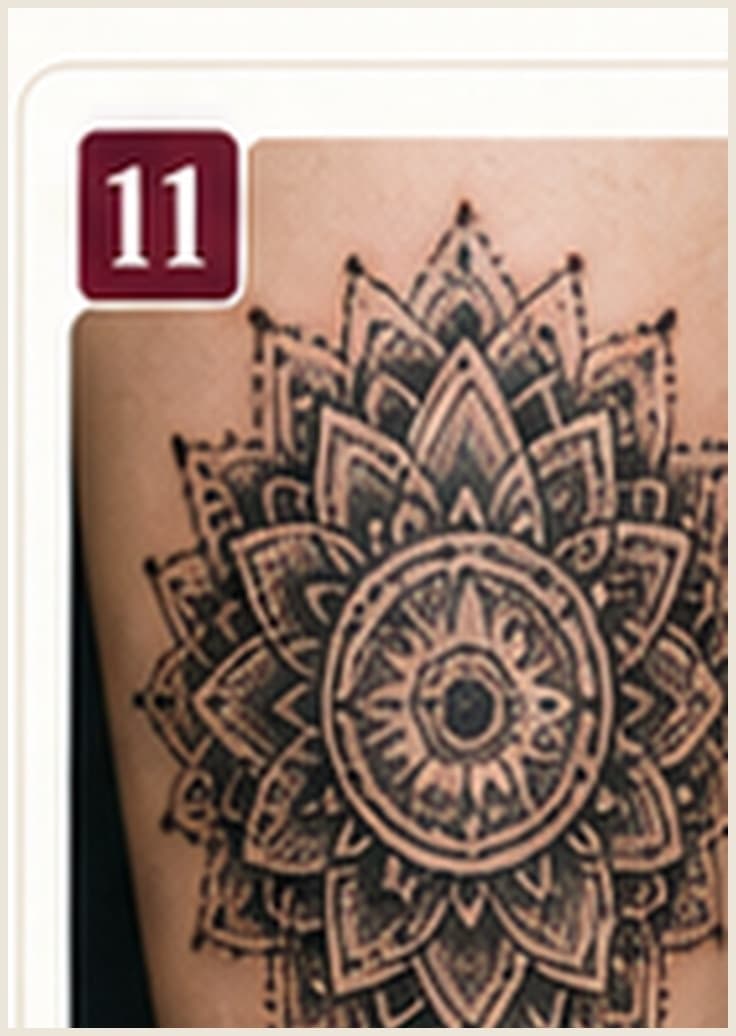
Dotwork builds shading and texture from hundreds or thousands of individual dots. Closely packed dots create darkness; wider spacing produces lighter tones and a soft, grain-like transition.
- Key features — stippled shading, detailed texture, gradual tonal changes, intricate patterning
- Popular designs — mandalas, animals, religious imagery, geometric pieces, ornamental designs
- Best for — detailed, meditative artwork with a texture unlike conventional shading
- Discuss with your artist — dense dotwork takes time; make sure the design has enough scale to hold the pattern
12. Script / lettering
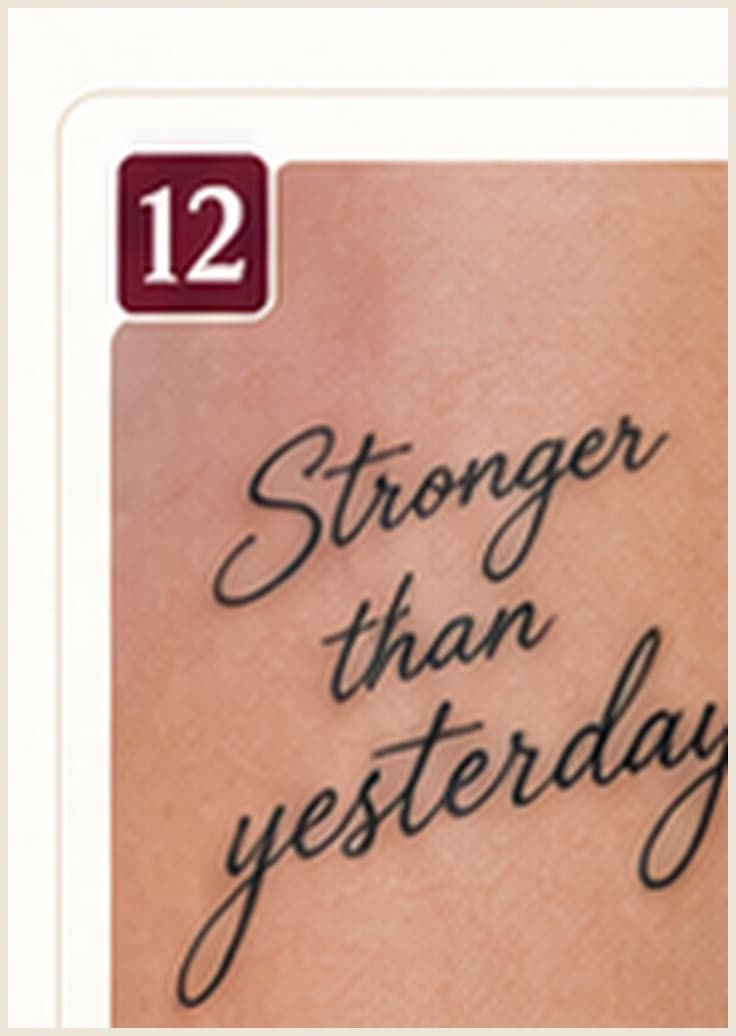
Script tattoos make words the artwork. A name, date, or short phrase can be deeply personal — but good typography is essential, because readability depends on font, spacing, size, and placement.
- Key features — handwriting, calligraphy, typewriter fonts, bold lettering, custom typography
- Popular designs — names, meaningful quotes, dates, initials, memorials, personal reminders
- Best for — a message that's direct, personal, and easy to understand
- Discuss with your artist — check spelling, grammar, translation, and letter spacing before the stencil goes on
How to choose the right style
- Bold and timeless impact — traditional, neo-traditional, and blackwork
- Subtle and delicate art — minimalist and fine-line
- Accurate detail — realism, for portraits, animals, and visual memories
- Colour and expression — watercolor and neo-traditional
- Structured patterns — geometric, dotwork, and ornamental blackwork
- Large storytelling pieces — Japanese, uniting several subjects in one flowing composition
Six questions to answer before you book
- Meaning — what story, memory, identity, or aesthetic should the tattoo express?
- Style — which visual language suits the idea: bold, delicate, realistic, geometric, or illustrative?
- Placement — how will the design follow the body, movement, visibility, and everyday clothing?
- Scale — is there enough space for the detail to stay clear as the tattoo ages?
- Artist — do they show strong healed work in this exact style, size, and complexity?
- Long-term fit — would the design still feel personal after trends, moods, and circumstances change?
Safety and aftercare
A tattoo breaks the skin, so hygiene matters as much as design. Choose a reputable studio that uses sterile, single-use needles and follows local infection-control requirements. Follow the artist's written aftercare instructions: wash your hands before touching the area, don't scratch or pick, and protect the healing tattoo from pools, friction, and strong sunlight. See a doctor for worsening redness, severe swelling, increasing pain, pus, or fever.
The one mistake to avoid
- Don't choose an artist from photos of freshly completed tattoos alone. Fresh ink always looks sharp — ask to see healed work in the style you want.
A useful reminder
- There's no single best tattoo style. The right choice matches your idea, your placement, your comfort with colour and detail, and the skills of the artist you select. Collect references freely — but ask them to guide an original design, not to copy someone else's tattoo exactly.
From inspiration to appointment, with Meilo
Choosing a tattoo is more than finding an attractive picture — you're matching a style, a placement, a scale, and above all an artist who can execute it well. A realism specialist may not be the right hands for delicate fine-line work. Meilo lets you browse tattoo artists' actual portfolios by style and location, save the references you love, and compare studios, feedback, and availability before you commit. Discover → shortlist → compare → consult → choose.
Curious what a tattoo costs? See our guide to tattoo prices in Bangalore.
Before you book
- Which tattoo style is best for a first tattoo?
- Minimalist and fine-line styles are popular first choices — small, subtle, quicker to complete, and easier to place discreetly. Just remember small doesn't mean easy: tiny linework needs a precise artist.
- Do watercolor tattoos fade faster?
- Soft, low-contrast colour can soften noticeably over time. A good artist preserves readability by anchoring the design with darker lines and contrast — ask to see healed watercolor pieces from their portfolio.
- What's the difference between blackwork and dotwork?
- Both are black-ink styles, but blackwork uses solid fills and bold graphic contrast, while dotwork builds shading from thousands of individual dots for a soft, textured, grain-like effect.
- How do I pick the right tattoo artist?
- Match the artist to the style — look for strong healed work in the exact style, size, and complexity you want, not just impressive photos of fresh ink. A realism specialist isn't automatically great at fine-line or geometric work.
- Can I get a tribal tattoo if it's not from my culture?
- Tread carefully. Modern tribal-inspired graphic work exists, but many patterns belong to specific Indigenous traditions and can carry identity, ancestry, or status meanings. Research the tradition and avoid copying sacred markings you don't understand.
- How big does a realism tattoo need to be?
- Bigger than most people expect. Realistic detail needs room for smooth tonal transitions — extremely small portraits tend to blur and lose definition as the tattoo ages.
- What should I check before a script tattoo?
- Spelling, grammar, translation (if it's not your language), font choice, and letter spacing — all before the stencil is applied. Script is unforgiving: a beautiful font can't fix a typo.